
As a parent, you want to make sure your child’s teeth and smile are developing properly. But when should your child first see an orthodontist? Does every child need braces at a young age? And what exactly is early orthodontic treatment?
At Rockaway Beach Orthodontics & Pediatric Dentistry, we help families throughout Rockaway Beach, Queens, Howard Beach, Belle Harbor, Lawrence, Linwood, and surrounding communities understand their children’s developing smiles and determine when orthodontic care may be beneficial.
The good news is that an early orthodontic evaluation does not necessarily mean your child needs braces right away. In many cases, the purpose of an early visit is simply to monitor your child’s growth and determine the ideal time for treatment.
What Is Early Orthodontic Treatment?
Early orthodontic treatment, sometimes called interceptive orthodontic treatment, takes place while a child still has some baby teeth. Rather than waiting until all of the permanent teeth have erupted, an orthodontist can evaluate how the teeth, jaws, and bite are developing and, when appropriate, intervene at the right stage of growth.
The American Association of Orthodontists (AAO) recommends that children have their first orthodontic check-up no later than age 7. At this age, many children have a combination of baby and permanent teeth, giving an orthodontist an opportunity to identify developing orthodontic concerns.
That doesn’t mean every 7-year-old needs orthodontic treatment. In fact, many children simply need periodic monitoring until they are older and ready for treatment.
Why Is an Early Orthodontic Evaluation Important?
Some orthodontic problems are easier to address while a child is still growing. An early evaluation allows an orthodontist to assess the development of the teeth and jaws and determine whether treatment should begin now, later, or not at all.
According to the AAO, certain problems may benefit from treatment during growth, including issues involving jaw development, crossbites, significant crowding, and impacted or improperly erupting teeth.
Early diagnosis can also give parents a better understanding of what to expect as their child’s permanent teeth come in.
Signs Your Child May Need an Orthodontic Evaluation
You may want to schedule an orthodontic evaluation if you notice:
- Crowded or overlapping teeth
- An overbite or underbite
- A crossbite
- Teeth that don’t come together properly
- Difficulty biting or chewing
- Teeth that are erupting in unusual positions
- Significant spacing between teeth
- A jaw that shifts when your child bites down
- Frequent cheek or roof-of-the-mouth biting
- Baby teeth that are lost unusually early or remain in place longer than expected
- Thumb, finger, or pacifier habits that may be affecting dental or jaw development
Some orthodontic problems aren’t obvious to parents. Even when your child’s teeth appear relatively straight, the relationship between the upper and lower jaws and the way the bite functions may still require evaluation.
Does Early Orthodontic Treatment Mean Braces?
Not necessarily.
One of the biggest misconceptions about early orthodontic evaluations is that an orthodontist will automatically recommend braces. In reality, treatment timing depends on your child’s individual dental development, jaw growth, bite, and specific orthodontic needs.
Some children may benefit from early treatment, while others are better served by waiting until more permanent teeth have erupted.
An orthodontist may recommend simply monitoring your child’s growth and checking periodically. The AAO specifically notes that an orthodontic check-up and starting orthodontic treatment are two different things.
What Problems Can Early Treatment Address?
Depending on your child’s individual needs, early orthodontic treatment may help address problems such as:
Crossbites
A crossbite occurs when some upper teeth bite inside the lower teeth. If left untreated, certain crossbites can affect how the jaws develop and how the bite functions.
Crowding
When there isn’t enough room for permanent teeth to erupt properly, early intervention may help manage available space and guide developing teeth.
Underbites
An underbite occurs when the lower teeth sit in front of the upper teeth. Depending on the child’s age and development, early treatment may be considered to address the developing bite.
Jaw Development
Because children are still growing, orthodontists can evaluate the relationship between the upper and lower jaws and determine whether growth guidance may be appropriate.
Erupting or Impacted Teeth
An orthodontic evaluation can help identify teeth that may have difficulty erupting normally. In some situations, early intervention can help create or preserve space for permanent teeth.
What Happens During an Early Orthodontic Evaluation?
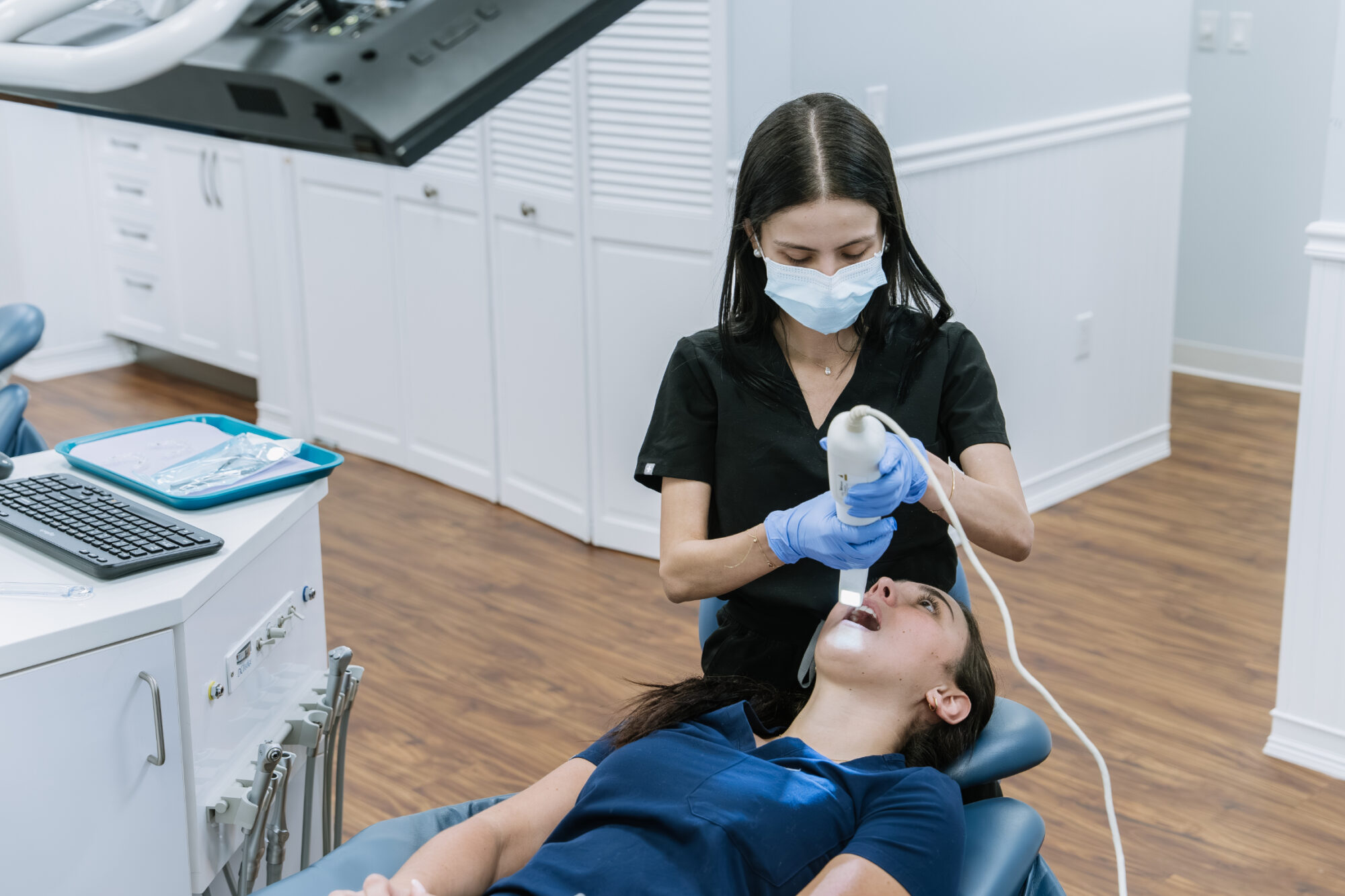
Your child’s first orthodontic appointment is typically focused on understanding how their smile and bite are developing.
The orthodontist may evaluate:
- The position of the teeth
- The way the upper and lower teeth fit together
- Jaw development
- Facial growth
- Available space for permanent teeth
- The eruption pattern of permanent teeth
- Oral habits that may affect development
Depending on your child’s needs, diagnostic records such as photographs or X-rays may also be recommended.
After the evaluation, you’ll have a better understanding of whether your child needs treatment, should be monitored, or can wait until a later stage of development.
When Should My Child See an Orthodontist?
The AAO recommends an initial orthodontic check-up no later than age 7, but parents shouldn’t feel that age 7 is a strict starting point for braces.
If you notice something concerning before age 7, there’s no reason to wait. And if your child is already older than 7, it’s certainly not too late to schedule an evaluation.
The ideal time to begin orthodontic treatment varies from child to child. Some children may need early treatment, while many begin orthodontic treatment later, depending on their dental development and specific needs.
Early Evaluation Doesn’t Always Mean Early Treatment
One of the most important things parents should know is that early evaluation is about timing—not automatically starting treatment early.
Sometimes the best treatment plan is to wait.
By evaluating your child while they are growing, an orthodontist can identify potential concerns and monitor changes over time. If treatment eventually becomes necessary, your child’s orthodontist can recommend the timing and approach that best fits their individual development.
At Rockaway Beach Orthodontics & Pediatric Dentistry, our goal is to provide personalized care based on each child’s unique smile, bite, growth, and needs.
Early Orthodontic Care in Rockaway Beach, Queens
If you’re wondering whether your child is ready for an orthodontic evaluation, you don’t have to wait until their teeth are fully grown in.
Rockaway Beach Orthodontics & Pediatric Dentistry proudly provides orthodontic and pediatric dental care for children and families in Rockaway Beach, Howard Beach, Belle Harbor, Lawrence, Linwood, and throughout Queens and the surrounding Long Island communities.
An early orthodontic evaluation can give you peace of mind and help ensure that your child’s developing smile is on the right track.
Have questions about your child’s teeth, bite, or jaw development? Contact Rockaway Beach Orthodontics & Pediatric Dentistry to schedule an evaluation and learn whether early orthodontic treatment may be right for your child.